Ferritin: what it shows, how to raise it, and when a high level means looking for inflammation

In short. Ferritin is the protein your cells use to store iron, and its level in the blood tells us about your iron stores. You can trust a low ferritin: a value below 30 ng/mL almost always means iron deficiency, even when hemoglobin is normal. A high ferritin proves nothing until it is checked further, because it rises with inflammation, fatty liver disease and metabolic problems. To raise ferritin, you find out where the iron is going and take oral iron once a day or every other day, then repeat the test in 6–12 weeks. To lower it, you treat the cause; bloodletting is needed when iron overload is confirmed.
Yulia Yusipova, MD, Rector of European University of Longevity and American Academy of Longevity. October 2026.
“My ferritin is 14.7, my hemoglobin is normal, and my doctor said everything is fine. Can I just leave it?” a patient asks.
A ferritin of 14.7 with normal hemoglobin means hidden iron deficiency. People live with it for years and blame it on age and poor sleep. The opposite story is just as common: ferritin of 300, 400, 500, a clean inflammation test, and the person is told “it’s just inflammation.” None of these numbers gives an answer on its own.
In a national survey of 8,021 US adults, about one in seven had ferritin below 30 (PMID 39316402).
In August 2026 the American Society of Hematology released a guideline on diagnosing iron deficiency, with ferritin cutoffs for different groups and a separate section on inflammation (PMID 42747316). The practical part, how to raise and how to lower ferritin, starts in the middle of this article.
What is ferritin?
Ferritin is a protein that cells use to keep iron in reserve. A small amount of it gets into the blood, and doctors use that level to estimate how much iron is sitting in the body’s “pantry.”
Iron is needed by hemoglobin, which carries oxygen, and by dozens of enzymes. Free iron damages cells, so the body keeps it packed inside ferritin. When stores run low, the pantry empties first, and only later does hemoglobin drop.
The second property of ferritin confuses patients and doctors alike. It is an acute-phase protein: it rises with any inflammation or infection, regardless of iron stores. This is stated in the very first lines of a 2021 Cochrane review (Cochrane is an independent organization that pulls together all the studies on a single question), which gathered 108 studies on the accuracy of this test (PMID 34028001). So it is two tests in one: one about stores and one about inflammation. Which one you are looking at on your lab report, a single number can’t tell you.
What does ferritin show?
Low ferritin shows that iron stores are depleted, and you can trust that result. A normal or high ferritin on its own says nothing about good stores: it is read together with C-reactive protein (CRP, the main test for inflammation) and transferrin saturation.
The numbers come from the same Cochrane review. In adults who came to a doctor with complaints, a cutoff of 30 ng/mL picked up about 8 in 10 cases of iron deficiency. False alarms were rare: out of 100 people without deficiency, 98 had ferritin above 30. The authors rated their confidence in these numbers as low, since only nine studies used this cutoff.
High ferritin is a different picture. It is poor at detecting iron overload, and the authors’ confidence here is very low. The British Society for Haematology lists the causes of high ferritin: iron overload, inflammation, liver and kidney disease, tumors, metabolic syndrome. As the next test after ferritin, it names transferrin saturation (PMID 29672840).
Here is why. Transferrin is the protein that carries iron through the blood. Saturation shows what share of these “trucks” is loaded right now. Ferritin tells you how much iron is in the warehouse, and saturation shows how much is being delivered to cells at this moment.
US lab reports list ferritin in ng/mL, European ones in µg/L. The number is the same.
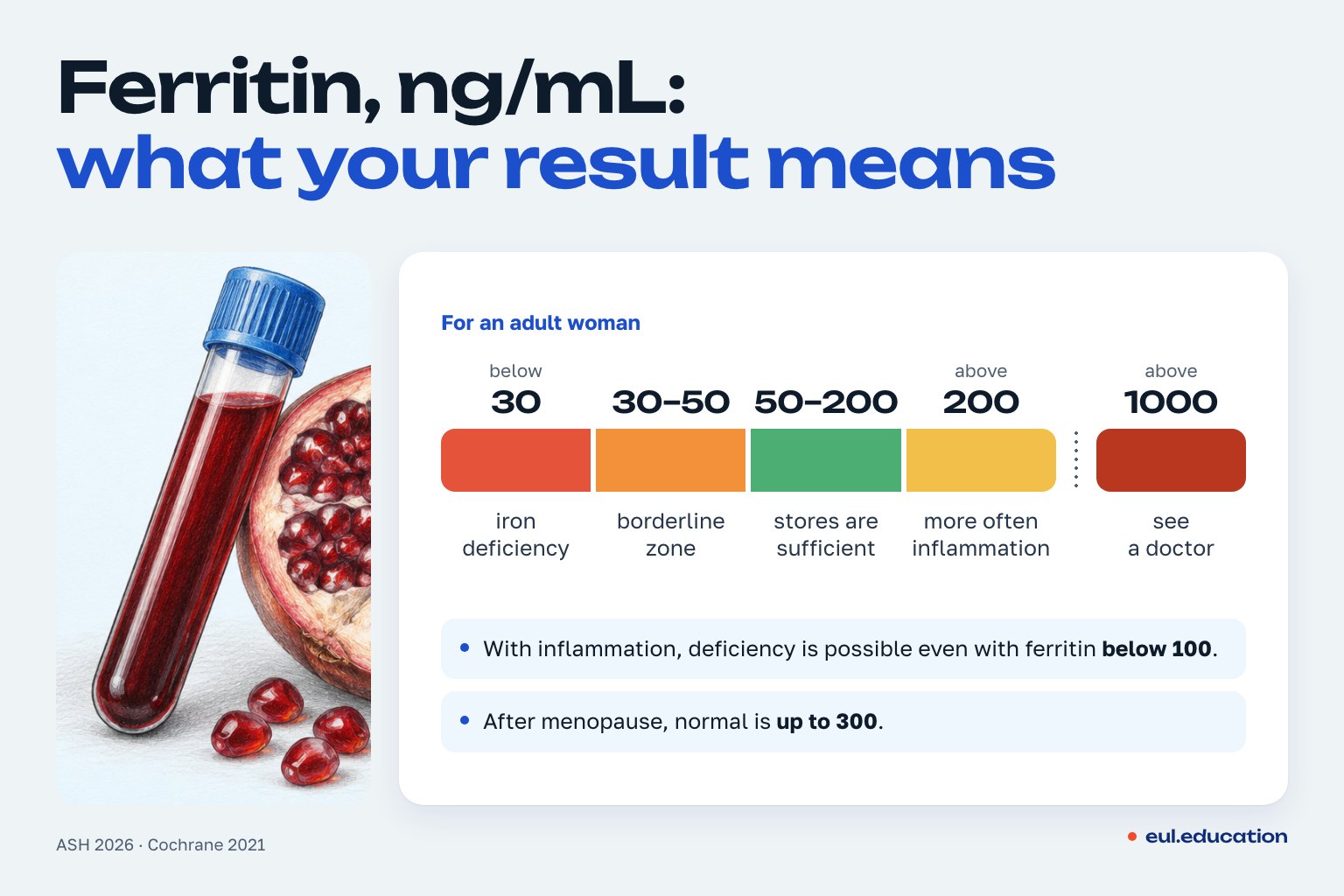
Ferritin: what your result means
For an adult woman, in ng/mL. The table is a starting point for a conversation with your doctor; no one is diagnosed from a single row.
| Ferritin | What it may mean | What to check alongside it |
|---|---|---|
| below 30 | Iron deficiency, even if hemoglobin is normal | Complete blood count; where the iron is being lost: periods, stomach and gut, celiac disease |
| 30–50 | Borderline zone: with heavy periods and fatigue, deficiency is possible | Transferrin saturation, CRP; repeat the test in the same phase of your cycle |
| below 100 with inflammation | Iron deficiency is possible: inflammation pushes ferritin up, and ASH 2026 allows for deficiency in anemia of inflammation when ferritin is below 100 | CRP; transferrin saturation (below 20% also points to deficiency) |
| 50–200 (after menopause up to 300) with normal CRP | Stores are usually sufficient | No need to treat with iron; look for the cause of symptoms elsewhere |
| above 200 before menopause, above 300 after | More often inflammation, fatty liver disease, metabolic problems; less often iron overload | CRP, transferrin saturation, ALT and GGT, fasting glucose and insulin; with saturation above 45–50%, the HFE gene |
| above 1000 | Guidelines have no separate cutoff for this number. In my experience, with a result like this I would see a doctor within days, without waiting for a routine visit | Liver, inflammation, iron metabolism |
What ferritin level is considered normal for a woman over 40?
Iron deficiency in adults is diagnosed when ferritin is below 30 ng/mL. On a lab report the lower limit is often set lower, so a result of 18 or 22 passes as “normal.” Ferritin has no “correct” upper number to aim for.
The 2026 American Society of Hematology (ASH) guideline is built on a systematic review of the evidence; nothing like it existed before for diagnosing iron deficiency. It proposes ferritin cutoffs for different groups, advises diagnosing iron deficiency whether or not anemia is present, and looks separately at people with inflammation (PMID 42747316). For adults, including those who menstruate, the cutoff is 30 ng/mL. The guideline considers a cutoff of 50 appropriate for heavy periods, symptoms of deficiency, ongoing risk factors, before surgery and when planning a pregnancy. In anemia of inflammation, iron deficiency is allowed for at ferritin below 100 or transferrin saturation below 20%. The authors rate their confidence in the data behind the cutoffs as low, and for inflammation as very low.
Two observations matter for women 40–60. In US data, women over 50 more often have “functional” deficiency: ferritin of 30 or higher, transferrin saturation below 20%, iron present in the stores but reaching the cells poorly. In women under 50, ordinary deficiency with low ferritin dominates (PMID 39316402).
The second observation: ferritin rises after menopause. In a Korean study of 3,082 women, those after menopause who fell into the top third for ferritin had metabolic syndrome (extra belly fat, higher blood pressure, blood sugar and lipids) about one and a half times more often. Before menopause there was no such link (PMID 21694651). This is an observation, and it doesn’t prove cause and effect. Still, a high ferritin in a 55-year-old woman is a reason to check blood sugar with insulin and the liver.
A word on the popular advice to “keep ferritin at 80–100.” I don’t know of any data showing that these numbers are better for health. ASH itself lists reducing the harm of overdiagnosis among the goals of its guideline, and it rejected a cutoff of 50 for everyone because of the risk of false diagnoses. The cutoffs of 30 and 50 are there to decide on treatment.
Why is very low ferritin dangerous?
Very low ferritin means your iron stores are almost empty, and without treatment the deficiency turns into anemia (PMID 42747316). The cause is more dangerous than the number itself: iron is leaving from somewhere, and that place needs to be found.
You can feel the deficiency even before anemia. In a French trial, 198 women aged 18–53 with fatigue, ferritin below 50 and normal hemoglobin were randomly assigned to two groups: 12 weeks of iron 80 mg a day or a placebo. On iron, fatigue dropped by almost half; on placebo, by a little over a quarter. Quality of life, mood and anxiety did not change (PMID 22777991).
A meta-analysis of 18 trials with 1,170 adults without anemia came to a similar result. Self-reported well-being improves moderately, while endurance on a treadmill and in other tests stays the same (PMID 29626044). So I don’t promise a surge of energy from iron. I found no sound trials on hair.
There is one consequence people rarely think about: iron deficiency distorts hemoglobin A1c, and your lab report may show prediabetes that you don’t have (PMID 15345893). I only read hemoglobin A1c next to ferritin and a complete blood count.
In women 40–60, iron is most often lost in two ways. The first is heavy and prolonged periods in perimenopause. The second runs through the stomach and gut: hidden blood loss or poor absorption with celiac disease, autoimmune gastritis, H. pylori, after stomach surgery, or with years of heartburn medication. A 2021 review in The Lancet says it plainly: the cause of deficiency should be looked for in everyone, celiac testing should be done by default, and men and postmenopausal women with iron deficiency anemia need an endoscopic evaluation (PMID 33285139).
If you have been found to have iron deficiency anemia after menopause, talk with your doctor about an evaluation of your stomach and gut, even if you have already been prescribed iron pills.
How to raise ferritin?
Ferritin is raised in two steps: stop the losses and take oral iron, usually 40–80 mg of elemental iron once a day or every other day (PMID 26289639). The test is repeated in 6–12 weeks. If ferritin doesn’t rise or you can’t tolerate the pills, discuss intravenous iron with your doctor.
Talk with your doctor about the dose and duration before buying iron on your own. With iron overload and with anemia of inflammation, extra iron does harm, and you can’t tell them apart from deficiency by how you feel.
What helps a pill work:
- One dose a day. Splitting the dose into morning and evening doesn’t help: in a Swiss trial, 120 mg in one dose and two doses of 60 mg were absorbed equally, and the hormone that shuts the door on iron was higher with split dosing (PMID 29032957).
- The “elemental iron” line on the label. The weight of the iron salt and the weight of the iron itself are different numbers, and the dose is counted by the second.
- Iron apart from dairy and calcium. In a Swedish study of 126 volunteers, 165 mg of calcium from milk or cheese in the same meal cut iron absorption roughly in half (PMID 1984335).
- Tea and coffee at a different time. For tea, this was shown in a study with labeled iron isotopes (PMID 34038558). For coffee I don’t have a verified number, but the rule is the same.
- Vitamin C if you like. In a Chinese trial, 440 adults with iron deficiency anemia took iron with or without 200 mg of vitamin C. Hemoglobin rose equally over two weeks, ferritin gained about 35 ng/mL over eight weeks in both groups, and side effects occurred in about one in five people in each (PMID 33136134). The American Gastroenterological Association (AGA) still recommends vitamin C; this is expert opinion without a dedicated review of studies. It does no harm, and it doesn’t look necessary.
Ferritin rises slowly. In the same French trial, over 12 weeks on 80 mg of iron it rose on average 11 ng/mL more than on placebo, and the authors advise the first follow-up test at 6 weeks (PMID 22777991).
Food helps when the drop is mild: iron from meat, liver and fish is absorbed better than iron from plants. A pronounced deficiency usually can’t be closed with food alone; this is my clinical observation, without a dedicated trial.
Why doesn’t a double dose of iron raise ferritin twice as fast?
Every dose of iron raises hepcidin, a liver hormone that shuts the door on iron in the gut, and it is still elevated a day later. That is why a double dose doesn’t give a double result, and daily dosing partly works against itself.
This was measured in 54 young women with ferritin of 20 or below, who were given iron with labeled isotopes. After a dose of 60 mg or more, hepcidin was higher the next day, and the share of iron absorbed fell by 35–45%. A sixfold dose (240 mg vs 40) gave only three times more absorbed iron: 18 mg vs 7 (PMID 26289639).
The next trial from the same group involved 40 women. Some took 60 mg every day for 14 days, others took the same 14 tablets every other day for 28 days. From the same number of tablets, the second group absorbed about a third more iron: 175 mg vs 131 (PMID 29032957). The authors themselves note that the result needs to be confirmed in women with anemia.
The same hepcidin explains why high ferritin is so often misleading. With inflammation, the liver releases more hepcidin, iron gets locked in the stores, ferritin rises, and the cells that need iron don’t get enough. Iron pills are absorbed worse in this situation, because hepcidin blocks their way in (PMID 33285139).
Which is better: taking iron every day or every other day?
Every-other-day dosing wins on absorption, while blood tests have so far shown no difference. The schedule is chosen by tolerance: every other day is a good option if daily pills make you nauseous or upset your stomach.
A 2025 meta-analysis combined 11 trials with 1,014 people with iron deficiency anemia. Ferritin, iron and transferrin saturation rose equally on both schedules. Hemoglobin went up slightly more with daily dosing, but the difference was no greater than chance. Side effects overall were about even, a metallic taste was more common with daily dosing, and the authors rated the quality of the data as very low (PMID 40841680).
Another review, of 594 people, found less nausea and fewer bowel problems with every-other-day dosing (PMID 37979057).
There is also a recent argument for the daily schedule. In an Indian trial, 60 young women with ferritin below 20 took either 60 mg every day or 120 mg every other day for two weeks. Red blood cell measures improved faster on the daily schedule, and the groups did not differ in iron levels or side effects (PMID 41354563).
In 2024 the AGA put the practical rule this way: oral iron no more than once a day, and some people tolerate every-other-day dosing better with similar absorption (PMID 38864796).
What to raise ferritin with: which form of iron is best?
According to the 2024 AGA review, no form of oral iron beats the others on results, and ferrous sulfate is the cheapest of all. The form is changed when the pills are poorly tolerated.
In small studies, iron bisglycinate is gentler on the stomach; it has no proven advantage for ferritin or hemoglobin. I went through the forms of iron, their tolerability and interactions in detail in the article “Iron in supplements: how to choose?” If you and your doctor decide on an iron chelate, these are the ones we stock: Biogeek Iron Chelate and the SFI Health chewable iron chelate. One Biogeek capsule contains 30 mg of elemental iron. This is a gentle dose for people who tolerate iron poorly. Two capsules give 60 mg, within the usual treatment dose of 40–80 mg; how many capsules you need is for your doctor to decide. On any label, look for the amount of elemental iron per capsule or tablet and count your dose by that.
When is intravenous iron needed, and what are its risks?
Iron infusions are prescribed when pills are not tolerated, don’t raise ferritin, or iron isn’t absorbed, for example after bariatric surgery or with active inflammatory bowel disease (PMID 38864796). The main risk of one of these drugs, ferric carboxymaltose (Injectafer in the US, Ferinject in Europe), is a drop in blood phosphate.
Anaphylaxis, a severe allergic reaction, to modern iron preparations is very rare, according to the AGA.
On phosphate, there are two identically designed trials in the US, PHOSPHARE-IDA: 245 adults with iron deficiency anemia, almost all of them women around 45, for whom pills had not helped or were not suitable. After two infusions of ferric carboxymaltose, phosphate fell below normal in about three out of four. After one infusion of another drug, ferric derisomaltose, this happened in about one in twelve (PMID 32016310). The trial was funded by the maker of the second drug, and the authors themselves write that the clinical significance of the difference has yet to be studied.
The consequences can be serious. A case has been described of a 70-year-old man who received repeated infusions of ferric carboxymaltose: persistently low phosphate, leg pain, microfractures of the foot and collapsed vertebrae, with osteomalacia (softening of the bone) confirmed by biopsy (PMID 37127260).
On September 1, 2026, the FDA added a boxed warning to the Injectafer label (in Europe it is Ferinject) about the risk of symptomatic low phosphate. A boxed warning is the strictest warning on a US drug label. The FDA notice contains no ban or recall of the drug. The FDA lists muscle weakness and pain, fatigue, tremor, confusion, seizures and irregular heartbeat as symptoms of low phosphate, and long, severe phosphate deficiency can end in osteomalacia and fractures. According to the agency’s own data, phosphate is measured in fewer than one in five administrations of the drug (FDA notice).
If your doctor has prescribed Injectafer (Ferinject), here is what the FDA label means in practice.
You can:
- be treated with this drug if it is right for you: it has not been banned;
- ask for your phosphate to be checked before and after the course, especially if you have inflammatory bowel disease, which the FDA names as a risk factor.
You shouldn’t:
- have an infusion when your phosphate is already low: according to the label, it is raised first;
- repeat the course within three months without a phosphate test;
- stay silent about weakness, pain in muscles, bones and joints, fatigue or confusion if they appear after an infusion: report them to your doctor right away.
With a severe or persistent drop in phosphate, the FDA advises doctors to consider stopping the drug for good.
Which IV iron is safer?
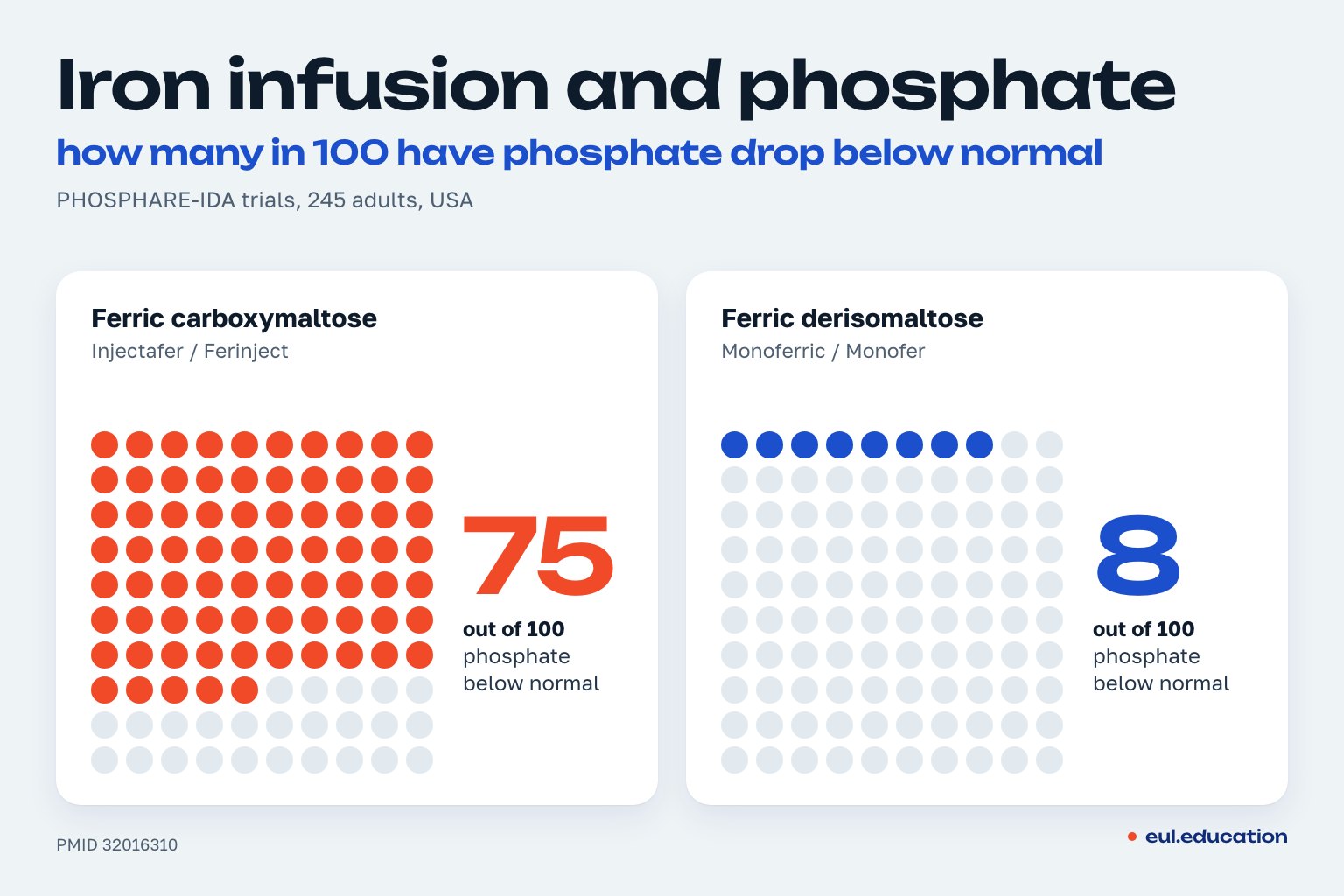
On the risk of low phosphate, other intravenous drugs looked better than ferric carboxymaltose in head-to-head trials: after it, phosphate fell in 4–8 out of 10 people, after other drugs much less often. In the US these are ferric derisomaltose (Monoferric, Monofer in Europe), ferumoxytol (Feraheme) and iron sucrose (Venofer). None of them is free of risk.
Ferric derisomaltose was compared with ferric carboxymaltose in the two PHOSPHARE-IDA trials I described above. Phosphate fell below normal in about one in twelve people on ferric derisomaltose and in three out of four on ferric carboxymaltose (PMID 32016310).
Ferumoxytol was compared with ferric carboxymaltose in a trial of almost 2,000 people with iron deficiency anemia. Low phosphate was found in 4 out of 1,000 people after ferumoxytol and in almost 4 out of 10 after ferric carboxymaltose. Severe allergic reactions and drops in blood pressure occurred in fewer than 1 in 100 people in both groups, and no one had anaphylaxis (PMID 29417614). The trial was funded by the maker of ferumoxytol. Ferumoxytol itself has carried its own boxed warning about the risk of severe allergy since 2015: it is given over no less than 15 minutes, and the person is observed for at least 30 minutes after the infusion (Feraheme label).
Iron sucrose is given in small portions. In a Chinese trial of 371 people, it was infused up to 11 times at 200 mg each, while ferric carboxymaltose was given 1–2 times. Hemoglobin rose equally, and the authors noted a temporary drop in phosphate after ferric carboxymaltose (PMID 37897561). This trial was funded by the maker of ferric carboxymaltose.
The takeaway: ask which exact drug you are being prescribed. If it is Injectafer and the courses will be repeated, for example with heavy periods or a bowel disease, talk with your doctor about monitoring phosphate and about a drug that lowers it less often.
How to lower ferritin if it is high?
Ferritin comes down when the cause of its rise is treated. First you find out what is behind the number: inflammation, fatty liver disease and metabolic problems, or iron overload. Bloodletting is needed when overload is confirmed.
The order of testing:
- CRP. If it is elevated, ferritin may be up because of inflammation, and that is what gets treated first.
- Transferrin saturation. Normal saturation with high ferritin argues against hereditary iron overload.
- Liver and metabolism: ALT, GGT, fasting glucose and insulin, waist size, how much alcohol per week.
- The HFE gene, if saturation is above 45% in a woman before menopause or above 50% after. This is the gene for hereditary hemochromatosis (PMID 35662478).
Hemochromatosis, the inherited buildup of iron, is fairly common in people of European descent. In a US survey of almost 100,000 people, two copies of the main gene variant were found in about one in 230 non-Hispanic white participants. Among such women who didn’t know their diagnosis, ferritin was above 200 in slightly more than half (PMID 15858186).
In the UK Biobank, 451,000 people aged 40–70, two copies of the variant were found in one in 156. By the end of follow-up, hemochromatosis had been diagnosed in one in five such men and in about one in ten women (PMID 30651232).
In women the disease shows up later, because periods remove some of the iron for years. With confirmed hemochromatosis, bloodletting is the treatment: the European Association for the Study of the Liver sets the goal of bringing ferritin below 50, then keeping it below 100 (PMID 35662478).
A very different situation is “metabolic” high ferritin, when there is slightly more iron than normal in the liver against a background of insulin resistance. In a French trial of 274 such patients, a year of bloodletting plus dietary advice was compared with dietary advice alone. Ferritin fell to 71 vs 733 in the comparison group, but blood sugar and liver tests did not improve, weight went up slightly, and fatigue appeared in one in four vs one in forty (PMID 27685251). Test results improved in those who lost weight, regardless of bloodletting.
There is also data pointing the other way. In an Italian trial of 38 patients with fatty liver disease and ferritin of 250 or more, among those who completed the protocol, the liver improved on biopsy in 8 of 12 after bloodletting and in 2 of 9 without it (PMID 24659891). The sample is small, and only those who reached the end were counted.
So with metabolic high ferritin, the first step is still food and movement to bring weight down. Don’t start giving blood for the sake of a ferritin number, and don’t take iron or multivitamins with iron “just in case”: talk with your doctor about what your cause is.
How to prepare for a ferritin test?
Have your ferritin drawn when you don’t have a cold or a flare of a chronic illness, in the morning on an empty stomach, without iron supplements that day. With borderline values, around 30, repeat the test in the same phase of your cycle.
Inflammation raises ferritin, so a test taken during a cold or other respiratory infection will show an inflated number. For transferrin saturation an empty stomach matters more: ASH asks for it to be drawn fasting, 5–9 hours without food, multivitamins or iron supplements, because the result depends on recent meals (PMID 42747316).
Iron measures fluctuate across the cycle (PMID 8237879). With a ferritin of 70, the day of the draw makes no difference. With a borderline one, around 30, it may decide whether you are recorded as deficient or not.
What in the ferritin data is still debated?
The exact cutoffs and the dosing schedule are debated, and on both questions the data diverge. It is worth keeping this in mind when reading any article about ferritin, including this one.
- The ASH 2026 cutoffs are conditional recommendations. Confidence in the data behind them is low, and for people with inflammation very low. The guideline covers only diagnosis and has no treatment recommendations.
- Whether ferritin is suitable for testing people without complaints, Cochrane could not say: there is too little data (PMID 34028001).
- On vitamin C and on bloodletting for metabolic ferritin, studies say different things; I showed both sides above.
Which tests to take with ferritin, and what to ask your doctor?
Along with ferritin, you take a complete blood count, CRP, serum iron and total iron-binding capacity, from which transferrin saturation is calculated. With high ferritin, add liver tests and fasting glucose and insulin.
If ferritin is between 30 and 100 and there are symptoms, I add soluble transferrin receptors. This marker rises when cells are short of iron. In the complete blood count I look at hemoglobin and mean corpuscular volume (MCV): with long-standing iron deficiency, red blood cells get smaller.
Questions worth asking your doctor:
- Is my ferritin below 30? If so, where am I losing iron?
- Could I have inflammation that is pushing the number up?
- What is my transferrin saturation?
- In how many weeks do we repeat the test, and what do we do if it doesn’t go up?
- If you are prescribing an infusion, which drug is it, and will we check phosphate?
My personal view
To me, high ferritin on its own is no reason to give blood, and low ferritin is no reason to go straight to an IV. A number of 80 or 100 on a lab report says nothing about health until CRP and transferrin saturation sit next to it.
I trust a low ferritin, and a high one only after CRP and transferrin saturation. A few years ago I used to retell the idea of Morley Robbins and Douglas Kell: ferritin is a vivid marker of inflammation, so the lower it is, the less inflammation there is. The data and clinical practice recommend separating ferritin as a measure of iron status from ferritin as a marker of inflammation and a tumor marker.
Sometimes I look at high ferritin almost as a tumor marker. Many people with tumors have elevated blood ferritin, and the higher it is, the more often the disease is aggressive (PMID 23891969). This signal is nonspecific: ferritin also rises with inflammation, liver disease and metabolic problems, so no diagnosis is made from it. If high ferritin is explained neither by inflammation, nor by the liver, nor by iron overload, I keep looking for the cause.
I read ferritin only as part of a panel: ferritin, CRP, transferrin saturation, complete blood count, and soluble transferrin receptors if needed. With low ferritin, I first look for where the iron is going, and only then choose a dose. With high ferritin, I go step by step: inflammation, saturation, liver and metabolism, the HFE gene. If ferritin hasn’t risen on pills by the follow-up test, I find out why the iron isn’t being absorbed, and I don’t raise the dose blindly.
Questions I get asked very often
What ferritin level is normal for women?
Iron deficiency in adults is diagnosed when ferritin is below 30 ng/mL, even if the lower limit on your lab report is lower and hemoglobin is normal. Values of 30–50 are a borderline zone, where the decision depends on symptoms and how heavy your periods are. There is no “ideal” upper number. Ferritin above 200 before menopause and above 300 after calls for looking for the cause together with your doctor.
Can I raise ferritin with food alone?
When the drop is mild, food helps: iron from meat, liver and fish is absorbed better than iron from plants, while dairy, tea and coffee in the same meal reduce absorption. A pronounced deficiency and ongoing blood loss usually can’t be closed with food alone; you need iron supplements and a search for the cause.
How long does it take for ferritin to rise on pills?
In a trial of women with ferritin below 50, iron 80 mg a day for 12 weeks raised ferritin on average 11 ng/mL more than placebo. With anemia and higher doses, it rose by about 35 over 8 weeks. The first follow-up test is usually at 6–12 weeks.
Why isn’t my ferritin rising even though I take iron?
Most often the losses continue (heavy periods, the gut), the iron isn’t absorbed (celiac disease, autoimmune gastritis, H. pylori, heartburn medication, stomach surgery), or inflammation shuts the door on iron through hepcidin. In that case the cause is looked for, and intravenous iron is discussed with your doctor.
My ferritin is high but my CRP is normal. Is that dangerous?
On its own, a result like this is not a diagnosis. It is a reason for the next tests: transferrin saturation, liver tests, glucose and insulin. If saturation is above 45% before menopause or above 50% after, the HFE gene is checked, the gene for hereditary hemochromatosis.
Do I need to take vitamin C with iron?
Not necessarily. In a trial of 440 adults with iron deficiency anemia, iron with and without vitamin C raised hemoglobin and ferritin equally. Vitamin C does no harm, so if it is more convenient for you, you can keep it.
Has Injectafer (Ferinject) been banned?
No. On September 1, 2026, the FDA added a boxed warning to the label of ferric carboxymaltose (Injectafer in the US, Ferinject in Europe) about the risk of symptomatic low phosphate. The FDA notice contains no ban or recall. The agency advises correcting low phosphate before an infusion and checking it in people with risk factors and in everyone who repeats a course within three months.
Are iron infusions dangerous?
Severe allergy to modern preparations is very rare. A common side effect of ferric carboxymaltose is a drop in phosphate: in two trials it fell in about three out of four patients. Before a course, ask which drug you are being prescribed, and talk with your doctor about monitoring phosphate.
Sources
- Garcia-Casal MN et al. Serum or plasma ferritin concentration as an index of iron deficiency and overload. Cochrane Database Syst Rev, 2021. 108 studies; at a cutoff of 30 µg/L in people seeking care, sensitivity 79%, specificity 98%, low certainty. PMID 34028001
- Powers JM et al. American Society of Hematology 2026 guidelines for diagnosis of iron deficiency. Blood Adv, 2026. 5 GRADE recommendations; cutoffs of 30, 50 and 100 ng/mL, transferrin saturation below 20%, and a 5–9 hour fasting draw checked against the full text. PMID 42747316
- Tawfik YMK et al. Absolute and Functional Iron Deficiency in the US, 2017-2020. JAMA Netw Open, 2024. NHANES, 8,021 adults; absolute deficiency 14%, functional 15%. PMID 39316402
- Cullis JO et al. Investigation and management of a raised serum ferritin. Br J Haematol, 2018. PMID 29672840
- Pasricha SR et al. Iron deficiency. Lancet, 2021. PMID 33285139
- Cho GJ et al. Serum ferritin levels are associated with metabolic syndrome in postmenopausal women but not in premenopausal women. Menopause, 2011. Odds ratio 1.62 for the top tertile. PMID 21694651
- Vaucher P et al. Effect of iron supplementation on fatigue in nonanemic menstruating women with low ferritin: a randomized controlled trial. CMAJ, 2012. Fatigue −47.7% vs −28.8%, ferritin +11.4 µg/L vs placebo. PMID 22777991
- Houston BL et al. Efficacy of iron supplementation on fatigue and physical capacity in non-anaemic iron-deficient adults. BMJ Open, 2018. PMID 29626044
- Coban E et al. Effect of iron deficiency anemia on the levels of hemoglobin A1c in nondiabetic patients. Acta Haematol, 2004. PMID 15345893
- Moretti D et al. Oral iron supplements increase hepcidin and decrease iron absorption from daily or twice-daily doses in iron-depleted young women. Blood, 2015. PMID 26289639
- Stoffel NU et al. Iron absorption from oral iron supplements given on consecutive versus alternate days and as single morning doses versus twice-daily split dosing in iron-depleted women. Lancet Haematol, 2017. Fractional absorption 16.3% vs 21.8%. PMID 29032957
- Dhanvijay AD et al. Efficacy of daily versus alternate day oral iron supplementation for management of anaemia among general population: a systematic review and meta-analysis. BMC Pharmacol Toxicol, 2025. PMID 40841680
- Kamath S et al. Daily versus alternate day oral iron therapy in iron deficiency anemia: a systematic review. Naunyn Schmiedebergs Arch Pharmacol, 2024. PMID 37979057
- John NM et al. Daily oral iron supplementation produced greater improvements in hematological parameters than alternate day doses. Clin Nutr, 2026. PMID 41354563
- DeLoughery TG et al. AGA Clinical Practice Update on Management of Iron Deficiency Anemia: Expert Review. Clin Gastroenterol Hepatol, 2024. PMID 38864796
- Hallberg L et al. Calcium: effect of different amounts on nonheme- and heme-iron absorption in humans. Am J Clin Nutr, 1991. Absorption reduced by 50–60%. PMID 1984335
- Lazrak M et al. Tea Consumption Reduces Iron Bioavailability from NaFeEDTA in Nonanemic Women and Women with Iron Deficiency Anemia. J Nutr, 2021. PMID 34038558
- Li N et al. The Efficacy and Safety of Vitamin C for Iron Supplementation in Adult Patients With Iron Deficiency Anemia: A Randomized Clinical Trial. JAMA Netw Open, 2020. PMID 33136134
- Wolf M et al. Effects of Iron Isomaltoside vs Ferric Carboxymaltose on Hypophosphatemia in Iron-Deficiency Anemia: Two Randomized Clinical Trials (PHOSPHARE-IDA). JAMA, 2020. Hypophosphatemia 7.9–8.1% vs 73.7–75.0%; funded by Pharmacosmos. PMID 32016310
- Adkinson NF et al. Comparative safety of intravenous ferumoxytol versus ferric carboxymaltose in iron deficiency anemia: A randomized trial. Am J Hematol, 2018. 1,997 patients; hypophosphatemia 0.4% vs 38.7%; funded by AMAG. PMID 29417614
- Jin J et al. A randomized, controlled, open label non-inferiority trial of intravenous ferric carboxymaltose versus iron sucrose in patients with iron deficiency anemia in China. Front Med, 2024. 371 patients; funded by Vifor. PMID 37897561
- Samões B et al. Hypophosphatemic osteomalacia induced by intravenous iron therapy: a case report. Joint Bone Spine, 2023. PMID 37127260
- European Association for the Study of the Liver. EASL Clinical Practice Guidelines on haemochromatosis. J Hepatol, 2022. PMID 35662478
- Adams PC et al. Hemochromatosis and iron-overload screening in a racially diverse population. N Engl J Med, 2005. 99,711 participants; C282Y homozygotes 0.44% among non-Hispanic white participants. PMID 15858186
- Pilling LC et al. Common conditions associated with hereditary haemochromatosis genetic variants: cohort study in UK Biobank. BMJ, 2019. PMID 30651232
- Lainé F et al. Metabolic and hepatic effects of bloodletting in dysmetabolic iron overload syndrome: A randomized controlled study in 274 patients. Hepatology, 2017. PMID 27685251
- Valenti L et al. A randomized trial of iron depletion in patients with nonalcoholic fatty liver disease and hyperferritinemia. World J Gastroenterol, 2014. PMID 24659891
- Alkhateeb AA, Connor JR. The significance of ferritin in cancer: anti-oxidation, inflammation and tumorigenesis. Biochim Biophys Acta, 2013. Review: serum ferritin is elevated in many cancer patients, and the level is linked to how aggressive the disease is. PMID 23891969
- Kim I et al. Variations in iron-status measures during the menstrual cycle. Am J Clin Nutr, 1993. PMID 8237879
- FDA. FDA Adds Boxed Warning to Labeling for Ferric Carboxymaltose Injection (Injectafer) to Describe Risk of Low Phosphate Levels. Drug Safety Communication, September 1, 2026. Boxed warning, no ban. fda.gov
- FDA. Feraheme (ferumoxytol injection) label: boxed warning on severe allergic reactions since 2015; infusion over no less than 15 minutes, observation for at least 30 minutes. DailyMed
Warmly, Yulia and the EUL Education team
Disclosure: Nutrigeek is our store; we earn from purchases made there. These statements have not been evaluated by the Food and Drug Administration. This product is not intended to diagnose, treat, cure, or prevent any disease. This article is for education and does not replace a consultation with your doctor.

Yulia Yusipova, MD
Physician (MD), Rector of European University of Longevity and American Academy of Longevity.