
In short. Insulin resistance is a state in which muscle, liver and fat tissue respond to insulin less well, so the pancreas has to release more of it to keep blood sugar in check. For years glucose on a lab report stays normal, and only insulin goes up. It is checked with fasting glucose and fasting insulin from the same blood draw and the HOMA-IR index, alongside triglycerides, HDL (the “good” cholesterol) and waist size. It comes down with 5–7% weight loss, regular movement, sleep, and food with fiber and protein.
Yulia Yusipova, MD, Rector of European University of Longevity and American Academy of Longevity. October 2026.
“My glucose is 5.3, my hemoglobin A1c is 5.5%, my insulin is 14. My doctor said everything is normal. Is that true?” a patient asks me.
Each number falls within the normal range on the lab report. Together they give a HOMA-IR of 3.3, and with a result like that I start looking closer.
Insulin resistance shows up earlier than fasting blood sugar. In the British Whitehall II study, 6,538 civil servants were followed for about 10 years. In those who developed diabetes, insulin sensitivity dropped sharply about 5 years before the diagnosis, while fasting glucose shot up only in the last 3 years (PMID 19515410).
First I will go through which tests to get and how to calculate the index. How to lower insulin resistance and blood insulin is covered in the second half of the article.
What is insulin resistance?
Insulin resistance is reduced sensitivity of muscle, liver and fat tissue to insulin. The pancreas responds by making extra insulin, and for years that is enough: blood sugar on the test is normal, and only insulin is high.
Insulin helps glucose get into cells. After a meal, most of the sugar is taken up by muscle. At night the liver releases glucose into the blood on its own, and insulin keeps that in check. If muscle and liver respond to insulin less well, the pancreas works under overload. When its reserve runs out, blood sugar starts to rise: first prediabetes, then type 2 diabetes (PMID 22683128).
Resistance in muscle and in the liver can differ from each other.
This state is reversible. Out of 100 people with prediabetes, 5–10 move on to diabetes each year, and about as many return to normal blood sugar (PMID 22683128). In the US Diabetes Prevention Program, people who returned to normal at least once had more than half the risk of developing diabetes over the following years (PMID 22683134).
Can you have insulin resistance with normal blood sugar?
Yes. At an early stage, extra insulin holds glucose in the normal range, and a fasting glucose test shows nothing.
The catch is that fasting insulin sees only part of the picture. An archive of glucose tolerance tests from the 1970s to the 1990s (a person drinks a glucose solution and blood is drawn several times) measured both sugar and insulin. Out of 4,185 people with normal sugar on the test, 2,079, a little more than half, had high insulin. Fasting insulin picked this up poorly (PMID 27344544).
Fasting glucose also changes from day to day. In Israel, 8,315 people aged 40–70 without diabetes wore glucose sensors for about a week. Out of 100 people whose sugar was normal on the first morning, 40 landed in the prediabetes range on other mornings, and 3 in the diabetes range (PMID 38589602). A single fasting test shows a single day.
Being slim does not protect you from insulin resistance. In a US survey of adults aged 18–44, it was found in about 40 out of 100, and almost half of them did not have obesity (PMID 34473288).
How can you tell if you have insulin resistance by the signs?
You cannot tell by how you feel: sleepiness after meals and sugar cravings happen without it too. Your waist and blood pressure give clues, and so does a routine blood chemistry panel.
If three of five signs are present, metabolic syndrome is diagnosed (PMID 19805654), and insulin resistance often stands behind it:
- waist of 80 cm (31.5 in) or more in women of European descent; in the US the cutoff is 88 cm (35 in);
- triglycerides of 1.7 mmol/L (150 mg/dL) or more;
- HDL, the “good” cholesterol, below 1.3 mmol/L (50 mg/dL);
- blood pressure of 130/85 or more, or treatment for blood pressure;
- fasting glucose of 5.6 mmol/L (100 mg/dL) or more.
A check you can do at home: your waist should be less than half your height. This cutoff predicts heart and metabolic risks better than body mass index (PMID 26975935).
Which tests should you get for insulin resistance?
Fasting glucose and fasting insulin from the same blood draw; HOMA-IR is calculated from them. Alongside, look at triglycerides, HDL, hemoglobin A1c and waist circumference. If there is doubt, your doctor orders a glucose tolerance test with insulin.
How to take the tests:
- in the morning, after 8–12 hours without food; water is fine;
- no alcohol or heavy dinner the night before, since they make triglycerides jump;
- compare insulin over time only within the same lab.
The last point applies to everyone. In a British comparison, 11 insulin tests measured the same 150 samples, and the results differed by up to twofold (PMID 17363420).
I read hemoglobin A1c alongside ferritin and a complete blood count. Iron deficiency pushes A1c up, and the lab report shows prediabetes that is not there (PMID 15345893).
In a glucose tolerance test with insulin, blood is drawn five times, from fasting to 120 minutes. There are no generally accepted cutoffs for insulin in this test; the curve is read by a doctor.
In the US, glucose and triglycerides are reported in mg/dL; many other countries use mmol/L. Insulin uses the same unit everywhere: µIU/mL, sometimes written µU/mL.
Tests for insulin resistance: what they show and how to read them
| Test | What it shows | Lab report cutoff: mmol/L (mg/dL) | My reference point | Source |
|---|---|---|---|---|
| Fasting glucose | How the liver holds blood sugar overnight | Normal below 5.6 (100); prediabetes 5.6–6.9 (100–125); diabetes 7.0 (126) or more | Only together with insulin | ADA 2025; Shilo 2024 |
| Fasting insulin | How much hormone it takes to hold blood sugar | Lab reference range; pmol/L = µIU/mL × 6.945 | Around 5 µIU/mL (35 pmol/L), a clinician’s position | Manley 2007 |
| HOMA-IR | An index calculated from glucose and insulin | Lab reports often say “up to 2.5–2.7” | From 2.0, a reason to look closer | Matthews 1985; Gayoso-Diz 2013 |
| Hemoglobin A1c (HbA1c) | Average blood sugar over roughly 3 months | Normal below 5.7%; prediabetes 5.7–6.4% | Can read falsely high with iron deficiency | ADA 2025; Coban 2004 |
| Fasting triglycerides | The fat side of insulin resistance | Sign of metabolic syndrome from 1.7 (150) | For insulin resistance in people with excess weight, the best cutoff is 1.47 (130) | Alberti 2009; McLaughlin 2003 |
| HDL | The “good” cholesterol | In women, a sign of metabolic syndrome below 1.3 (50) | Read in pair with triglycerides | Alberti 2009 |
| Triglycerides / HDL | An inexpensive clue | Not on the lab report, you divide it yourself: 1.3 or more in mmol/L, 3.0 or more in mg/dL | Finds two out of three people with insulin resistance | McLaughlin 2003 |
| Waist circumference | Fat inside the abdomen | From 80 cm (women of European descent); in the US from 88 cm (35 inches) | Waist less than half your height | Alberti 2009; Ashwell 2016 |
| 2-hour glucose on a glucose tolerance test | How the body handles a load of sugar | Normal below 7.8 (140); impaired tolerance 7.8–11.0 (140–199); diabetes 11.1 (200) or more | Only for the 75 g glucose test | ADA 2025 |
This table is a guide for a conversation with your doctor. No diagnosis is made from a single row.
How do you calculate HOMA-IR, and what index is considered normal?
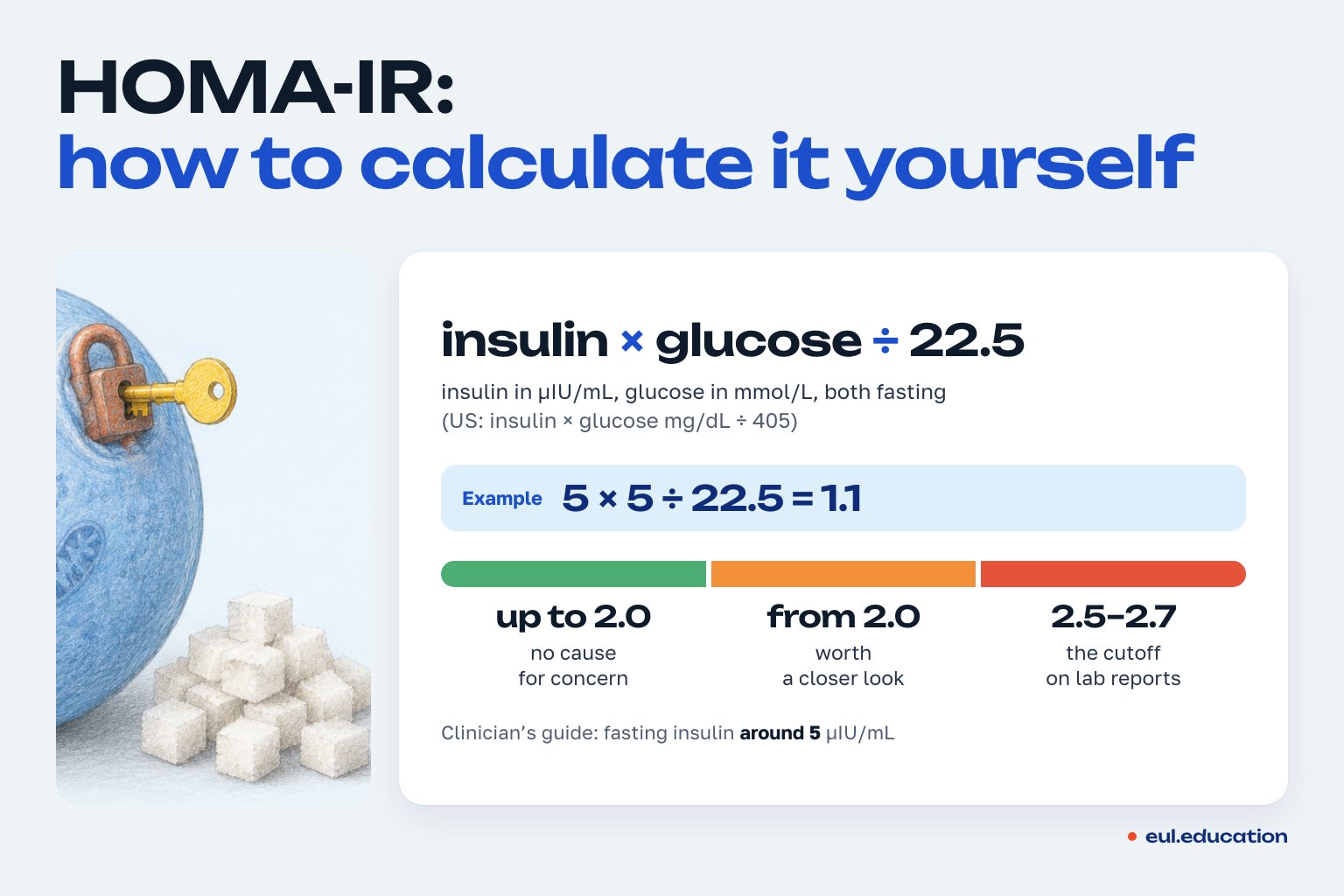
HOMA-IR = fasting glucose (mmol/L) × fasting insulin (µIU/mL) ÷ 22.5. If glucose is in mg/dL, divide by 405. Lab reports often list a cutoff of 2.5–2.7; for a woman of 40–60, I start looking closer from 2.0.
Two examples:
- The patient from the beginning of the article: 5.3 × 14 ÷ 22.5 = 3.3. In US units it is the same: 95 mg/dL × 14 ÷ 405 = 3.3.
- Insulin 5 and glucose 5.0: 5.0 × 5 ÷ 22.5 = 1.1.
Where the different cutoffs come from can be seen in a Spanish study of 2,459 adults. The statistical cutoff, above which 10 out of 100 people fell, came out at 3.46. The cutoff at which signs of metabolic syndrome appear turned out to be 2.05. In women without diabetes it also depended on age (PMID 24131857).
Why do I look earlier than the lab cutoff for a woman of 40–60? Insulin rises years before blood sugar, and by waiting for 2.7 you can lose exactly the years when everything is reversible. On top of that, during the menopausal transition fat inside the abdomen increases; more on that below. With HOMA-IR from 2.0, I look at all the tests and at lifestyle; medication is usually not needed at this stage.
For fasting insulin, I use values around 5 µIU/mL as my reference point. This is my position as a clinician. There is no study that would call 5 normal for everyone, and lab reference ranges are wider.
The authors of the formula themselves wrote in 1985 that the precision of the index is modest (PMID 3899825). HOMA-IR works for screening; no diagnosis is made from the index alone.
Why does insulin resistance show up more often in women after 40?
During the years of the menopausal transition, women gain fat inside the abdomen, burn less energy and move less. All of this lowers insulin sensitivity.
In a US study, 156 women had abdominal scans every year for four years. Fat inside the abdomen grew significantly only in those who entered menopause during that time, and their energy expenditure during sleep dropped one and a half times more than in women of the same age (PMID 18332882).
In 1,470 women followed for ten years, metabolic syndrome grew more severe fastest in the years before menopause and around it (PMID 27487829).
With age, muscle also melts away, and muscle is the main consumer of sugar. In a US survey of 13,644 adults, those whose share of muscle was 10% higher had a HOMA-IR 11% lower (PMID 21778224). This is an observation; it does not prove cause.
Hormone therapy is not prescribed to treat insulin resistance. In perimenopause it is discussed with a doctor mainly for bones and heart; I work with bioidentical estradiol and micronized progesterone. I went over what the studies showed in my article “Hormones after menopause, heart and bones: two talks by Howard Hodis”. Discuss starting or stopping hormones with your doctor.
How do you lower insulin resistance?
The biggest effects come from losing 5–7% of body weight and regular movement; next come sleep, fiber with protein, and the order in which you eat foods. Medications are added when this is not enough, and that is your doctor’s decision.
Weight. In the US Diabetes Prevention Program, 3,234 people with elevated blood sugar, two thirds of them women, aimed for almost three years to lose 7% of their weight and move 150 minutes a week. For every 100 people per year, diabetes developed in about 11 on placebo, 8 on metformin and 5 in the lifestyle group (PMID 11832527). In a small trial, losing just 5% of body weight improved insulin sensitivity in the liver, muscle and fat (PMID 26916363).
Movement. A 2026 review pooled 86 trials with 4,358 adults with excess weight. All types of exercise, from walking to strength training, lowered fasting insulin and HOMA-IR, and interval training did so the most. The authors rated their confidence in the data as low to moderate (PMID 42833877). Choose the kind of exercise you will keep doing for years.
Short walks instead of long sitting. In seven one-day trials, short light walks breaking up long periods of sitting lowered blood sugar and insulin after meals (PMID 35147898). How this habit changes risk over the years has not been measured yet.
Sleep. A single night of 4 hours of sleep lowered insulin sensitivity by about a quarter in 9 healthy volunteers (PMID 20371664). The sample is tiny, but in a review of 10 observational studies covering 107,756 people, those who slept 5–6 hours or less developed diabetes 28% more often (PMID 19910503).
Food order. Fifteen people with prediabetes ate the same lunch on three days in a different order. When bread and other carbohydrates came 10 minutes after protein and vegetables, the blood sugar peak was more than 40% lower (PMID 30101510).
Fiber. In a large review of 185 observational studies and 58 trials, people who ate more fiber had type 2 diabetes 15–30% less often, with the best results at 25–29 g a day (PMID 30638909).
If you and your doctor decide to add a fiber supplement on top of fiber from food, this is the one we stock: Sunfiber.
How do you lower insulin in the blood?
Blood insulin goes down when sensitivity to it comes back: extra fat goes, muscles work, sleep improves, and your food has more fiber and protein. Success is measured by fasting insulin in the same lab.
The numbers in studies are more modest than on social media. In the same review of 86 trials, interval training lowered fasting insulin by an average of 2.24 µIU/mL (PMID 42833877). The rest comes from weight, sleep and food.
Fiber works quickly. Seventeen women with excess weight received 31 g of oat fiber a day for three days, and insulin sensitivity on a precise test went up (PMID 16567814).
There is a trap here. At Stanford, 55 people wearing sensors ate the same carbohydrate meals, and in those with insulin resistance, fiber, protein or fat eaten before rice did a poorer job of smoothing the sugar rise (PMID 40467897). With pronounced insulin resistance, weight and muscle do the main work.
The opposite also happens: insulin is very low and blood sugar is high. That is what a shortage of your own insulin looks like, and it calls for seeing a doctor right away.
How is insulin resistance treated: do you need metformin?
Metformin is considered in prediabetes when lifestyle is not enough, and it is prescribed by a doctor. In the same program it reduced the number of new diabetes cases by 31%, and work on weight and movement by 58% (PMID 11832527). After 15 years the difference shrank: minus 27% with lifestyle change and minus 18% on metformin (PMID 26377054).
Metformin has a cost. After about 5 years of use, low vitamin B12 was found in 4 out of 100 people versus 2 out of 100 on placebo, and the risk grew with each year of use (PMID 26900641). If you take metformin, have your B12 checked. Starting metformin “for prevention” based on an article is not a good idea: talk with your doctor about whether you need it.
Do semaglutide and tirzepatide help with insulin resistance?
Semaglutide and tirzepatide lower weight by 15–21% over almost a year and a half, and early data suggest insulin sensitivity starts to improve already at low doses. These are prescription drugs; the dose and how fast it is increased are chosen by a doctor.
In 1,961 adults with obesity and no diabetes, semaglutide lowered weight by 14.9% over 68 weeks, placebo by 2.4% (PMID 33567185). Over 72 weeks in 2,539 people, tirzepatide lowered weight by 15% at the lowest dose and by 20.9% at the highest, placebo by 3.1% (PMID 35658024). In a semaglutide trial of 957 people, the lowest of the daily doses took off 6% of weight and the highest 13.8%, and nausea rose along with the dose (PMID 30122305).
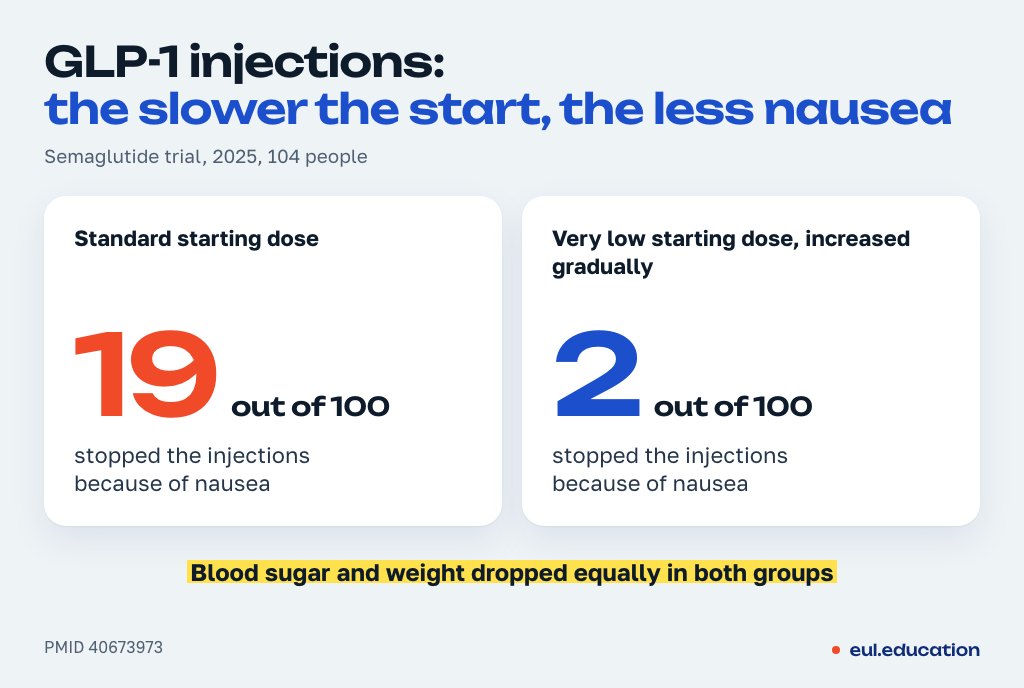
Slow dose increases are tolerated better. In an Israeli trial, 104 people with type 2 diabetes started semaglutide either by the label or at a dose about four times lower than the starting one, adding a little each week. Because of stomach problems, 2 out of 100 dropped out with slow titration and 19 out of 100 on the standard schedule. Blood sugar and weight dropped equally by six months (PMID 40673973).
On insulin sensitivity there is a small Japanese study: 16 people with obesity and type 2 diabetes took tirzepatide at the two lowest doses for three months, and on a precise test their tissues began taking up about one and a half times more glucose (PMID 40694059). There was no comparison group; this is a first signal.
After weight loss, the dose can sometimes be lowered. In a US trial run by the manufacturer, 378 people took the full tolerated dose of tirzepatide for more than a year. After another year, weight was 21.9% below baseline in those who stayed on it, 16.6% in those who switched to 5 mg, and 9.9% in those switched to placebo (PMID 42119587).
There is a lot of talk now about “microdosing”, meaning doses well below the starting doses on the label. There are no trials of microdoses as such in PubMed yet, only trials of slow dose titration.
After stopping, the weight comes back. A year after finishing a course of semaglutide, people had regained about two thirds of the weight they lost, and most of the improvements in blood pressure, blood sugar and lipids were gone (PMID 35441470).
Which supplements help with insulin resistance?
Supplements come after food, movement and sleep, and the data on them are weaker. The best studied is inositol in PCOS; alpha-lipoic acid showed no effect.
| Supplement | What reviews showed | Strength of evidence |
|---|---|---|
| Inositol | In women with PCOS, HOMA-IR fell by about 1, and fasting insulin fell too. Compared with metformin, no difference on most measures. No high-quality data (13 reviews, PMID 41757236) | Moderate, for PCOS only |
| Magnesium | In people with diabetes or at risk of diabetes, blood sugar on the glucose tolerance test improved. HOMA-IR went down, but the difference was not distinguishable from chance (18 trials, PMID 27530471) | Weak |
| Alpha-lipoic acid | 11 trials, 704 adults with excess weight: HOMA-IR and blood sugar did not change (PMID 40180416) | No effect found |
| Berberine | Studied mainly in people with type 2 diabetes (PMID 23118793) | This review has no data for insulin resistance without diabetes |
If you take metformin or other drugs that lower blood sugar, discuss adding any supplement with your doctor.
If you and your doctor decide on berberine, this is the one we stock: Berberine, 120 capsules (Biogeek).
Do you need a glucose sensor if you have insulin resistance?
A sensor is not required for the diagnosis; insulin resistance is identified by blood tests. For 10–14 days it is useful to see which meals and habits raise your own blood sugar.
People often write to me: “You wear a sensor, so what type of diabetes do you have?” I do not have diabetes. I have worn a sensor since 2018 to see the consequences of my habits before they reach a lab report.
In 153 healthy people without diabetes, blood sugar stayed between 3.9 and 7.8 mmol/L for 96% of the day and rose above 7.8 for about half an hour a day on average (PMID 31127824). In the Stanford study, people reacted to the same meals in very different ways. Those whose sugar “jumped” the most after potatoes had higher insulin resistance (PMID 40467897).
Sensor norms were built on small groups, mostly young and lean people. No diagnosis is made from a graph; it is better read together with your doctor.
What in the insulin resistance data is still debated?
The cutoffs and the order of events are debated, and this applies to any article on the topic, mine included.
- There is no single HOMA-IR cutoff: it depends on age, sex and ancestry (PMID 35939943).
- Insulin tests have still not been brought to one standard (PMID 17272483).
- What comes first, excess insulin or resistance, is still debated. It has not been proven that blood sugar spikes in healthy people cause insulin resistance.
- Eating “for your type” of resistance is still a hypothesis: in the Dutch PERSON trial, 242 people ate for 12 weeks on a plan matched to their type, and the main measure did not change (PMID 36599304).
When should you see a doctor, and what should you ask?
It is worth seeing a doctor if your fasting glucose is 5.6 mmol/L (100 mg/dL) or higher twice, your hemoglobin A1c is 5.7% or higher, your HOMA-IR is 2.0 or higher, or your waist is growing along with your triglycerides. Thirst, frequent urination and weight loss for no reason are a reason to go without delay.
A separate word about irregular cycles. Polycystic ovary syndrome (PCOS), renamed internationally in 2026 as PMOS, affects about one woman in eight (PMID 42119588). Insulin resistance is common with it, although some lean women have normal insulin sensitivity (PMID 23065822).
If your ALT (a liver enzyme) is above normal or an ultrasound found fat in your liver, tell your doctor: fatty liver disease and insulin resistance often go together.
Questions worth asking your doctor:
- What is my HOMA-IR, and at which lab will we retest?
- Could my hemoglobin A1c be skewed by iron deficiency?
- If you prescribe a medication, when and by which tests will we judge whether it works?
My personal view
A HOMA-IR of 2.3 on a lab report is not diabetes and not a reason to rush into medication. A normal fasting blood sugar guarantees nothing either: it shows one day and the work of the liver.
To me, insulin resistance is a window of several years when everything is reversible and the simplest things work: muscle, sleep, protein with fiber, a walk after dinner.
I look at glucose and insulin from the same blood draw, calculate HOMA-IR, read triglycerides with HDL and waist size alongside, and check hemoglobin A1c against ferritin. We retest at the same lab. I discuss metformin, semaglutide and tirzepatide with a patient only based on her tests, and I raise the dose gradually.
Questions I am asked very often
Can you have insulin resistance with normal glucose?
Yes. At an early stage the pancreas releases more insulin, and blood sugar stays normal for years. Out of 4,185 people with normal sugar on a glucose tolerance test, a little more than half had high insulin.
What fasting insulin is considered normal?
There is no single number: each lab has its own reference range, and different tests can differ up to twofold. I use values around 5 µIU/mL as my reference point; this is a clinician’s position. Compare results within the same lab.
Can lean women have insulin resistance?
Yes. In a US survey of adults aged 18–44, almost half of the people with insulin resistance did not have obesity. A normal weight does not rule it out; blood tests decide.
Can you get rid of insulin resistance for good?
Insulin sensitivity comes back when extra fat goes, especially around the belly, and muscles are put to work. It holds as long as those conditions hold.
What diet do you need for insulin resistance?
No special diet has been found that beats ordinary healthy eating. What works is a moderate calorie deficit, protein at every meal, 25–29 g of fiber and food order: vegetables and protein first, carbohydrates later.
Can you take semaglutide or tirzepatide in small doses?
There are no trials of microdoses as such. Slow titration is tolerated better, side effects rise with the dose, and low doses also lower weight, though less than full doses. Your doctor chooses the dose and the steps.
Sources
- Tabák AG et al. Trajectories of glycaemia, insulin sensitivity, and insulin secretion before diagnosis of type 2 diabetes: an analysis from the Whitehall II study. Lancet, 2009. 6,538 people, 505 cases of diabetes, median follow-up 9.7 years; HOMA sensitivity fell steeply 5 years before diagnosis, fasting glucose rose sharply over 3 years (from 5.79 to 7.40 mmol/L). PMID 19515410
- Tabák AG et al. Prediabetes: a high-risk state for diabetes development. Lancet, 2012. PMID 22683128
- Perreault L et al. Effect of regression from prediabetes to normal glucose regulation on long-term reduction in diabetes risk: results from the Diabetes Prevention Program Outcomes Study. Lancet, 2012. Hazard ratio 0.44. PMID 22683134
- Trouwborst I et al. Cardiometabolic health improvements upon dietary intervention are driven by tissue-specific insulin resistance phenotype. Cell Metab, 2023. PERSON trial, 242 people; the primary outcome (disposition index) did not change. PMID 36599304
- Crofts C et al. Identifying hyperinsulinaemia in the absence of impaired glucose tolerance: An examination of the Kraft database. Diabetes Res Clin Pract, 2016. PMID 27344544
- Shilo S et al. Continuous glucose monitoring and intrapersonal variability in fasting glucose. Nat Med, 2024. 8,315 people aged 40–70; of 5,328 normal on the first morning, 40% and 3% were reclassified. PMID 38589602
- Parcha V et al. Insulin Resistance and Cardiometabolic Risk Profile Among Nondiabetic American Young Adults: Insights From NHANES. J Clin Endocrinol Metab, 2022. HOMA-IR cutoff ≥2.5; 40.3% in 2015–2018. PMID 34473288
- Alberti KG et al. Harmonizing the metabolic syndrome. Circulation, 2009. PMID 19805654
- Ashwell M, Gibson S. Waist-to-height ratio as an indicator of ‘early health risk’. BMJ Open, 2016. PMID 26975935
- Manley SE et al. Comparison of 11 human insulin assays: implications for clinical investigation and research. Clin Chem, 2007. PMID 17363420
- Marcovina S et al. Standardization of insulin immunoassays: report of the American Diabetes Association Workgroup. Clin Chem, 2007. PMID 17272483
- Coban E et al. Effect of iron deficiency anemia on the levels of hemoglobin A1c in nondiabetic patients. Acta Haematol, 2004. PMID 15345893
- McLaughlin T et al. Use of metabolic markers to identify overweight individuals who are insulin resistant. Ann Intern Med, 2003. 258 people; TG 1.47 mmol/L, TG/HDL 3.0 (mg/dL), sensitivity 64–67%. PMID 14623617
- Matthews DR et al. Homeostasis model assessment: insulin resistance and beta-cell function from fasting plasma glucose and insulin concentrations in man. Diabetologia, 1985. Coefficient of variation of the resistance estimate 31%. PMID 3899825
- Gayoso-Diz P et al. Insulin resistance (HOMA-IR) cut-off values and the metabolic syndrome in a general adult population: effect of gender and age. BMC Endocr Disord, 2013. 2,459 adults; 3.46 by the 90th percentile, 2.05 by metabolic syndrome components. PMID 24131857
- Tahapary DL et al. Challenges in the diagnosis of insulin resistance: Focusing on the role of HOMA-IR and Tryglyceride/glucose index. Diabetes Metab Syndr, 2022. PMID 35939943
- American Diabetes Association. 2. Diagnosis and Classification of Diabetes: Standards of Care in Diabetes-2025. Diabetes Care, 2025. PMID 39651986
- Lovejoy JC et al. Increased visceral fat and decreased energy expenditure during the menopausal transition. Int J Obes, 2008. 156 women, 4 years; sleeping energy expenditure −7.9% versus −5.3%. PMID 18332882
- Gurka MJ et al. Progression of Metabolic Syndrome Severity During the Menopausal Transition. J Am Heart Assoc, 2016. PMID 27487829
- Srikanthan P, Karlamangla AS. Relative muscle mass is inversely associated with insulin resistance and prediabetes. J Clin Endocrinol Metab, 2011. PMID 21778224
- Knowler WC et al. Reduction in the incidence of type 2 diabetes with lifestyle intervention or metformin. N Engl J Med, 2002. 11.0 / 7.8 / 4.8 cases per 100 person-years. PMID 11832527
- Diabetes Prevention Program Research Group. Long-term effects of lifestyle intervention or metformin on diabetes development and microvascular complications over 15-year follow-up. Lancet Diabetes Endocrinol, 2015. PMID 26377054
- Magkos F et al. Effects of Moderate and Subsequent Progressive Weight Loss on Metabolic Function and Adipose Tissue Biology in Humans with Obesity. Cell Metab, 2016. PMID 26916363
- Jiao B et al. Exercise and Insulin-Resistance Biomarkers in Adults With Overweight/Obesity: A Network Meta-Analysis of Randomised Controlled Trials. Diabetes Obes Metab, 2026. Interval training: insulin −2.24 µIU/mL, HOMA-IR −0.67; confidence low to moderate. PMID 42833877
- Buffey AJ et al. The Acute Effects of Interrupting Prolonged Sitting Time in Adults with Standing and Light-Intensity Walking on Biomarkers of Cardiometabolic Health in Adults. Sports Med, 2022. PMID 35147898
- Donga E et al. A single night of partial sleep deprivation induces insulin resistance in multiple metabolic pathways in healthy subjects. J Clin Endocrinol Metab, 2010. PMID 20371664
- Cappuccio FP et al. Quantity and quality of sleep and incidence of type 2 diabetes. Diabetes Care, 2010. Relative risk 1.28 with short sleep. PMID 19910503
- Shukla AP et al. The impact of food order on postprandial glycaemic excursions in prediabetes. Diabetes Obes Metab, 2019. PMID 30101510
- Reynolds A et al. Carbohydrate quality and human health: a series of systematic reviews and meta-analyses. Lancet, 2019. PMID 30638909
- Weickert MO et al. Cereal fiber improves whole-body insulin sensitivity in overweight and obese women. Diabetes Care, 2006. PMID 16567814
- Wu Y et al. Individual variations in glycemic responses to carbohydrates and underlying metabolic physiology. Nat Med, 2025. PMID 40467897
- Aroda VR et al. Long-term Metformin Use and Vitamin B12 Deficiency in the Diabetes Prevention Program Outcomes Study. J Clin Endocrinol Metab, 2016. Low B12 4.3% versus 2.3% at year 5. PMID 26900641
- Wilding JPH et al. Once-Weekly Semaglutide in Adults with Overweight or Obesity. N Engl J Med, 2021. STEP 1 trial. PMID 33567185
- Jastreboff AM et al. Tirzepatide Once Weekly for the Treatment of Obesity. N Engl J Med, 2022. SURMOUNT-1 trial: 5 mg −15.0%, 10 mg −19.5%, 15 mg −20.9%. PMID 35658024
- O’Neil PM et al. Efficacy and safety of semaglutide compared with liraglutide and placebo for weight loss in patients with obesity. Lancet, 2018. Daily semaglutide 0.05–0.4 mg, 52 weeks. PMID 30122305
- Eldor R et al. Gradual Titration of Semaglutide Results in Better Treatment Adherence and Fewer Adverse Events. Diabetes Care, 2025. Open-label pilot trial, 104 people; start at 0.0675 mg versus 0.25 mg; discontinuation due to GI effects 2% versus 19%. PMID 40673973
- Yamaguchi Y et al. Early induction of insulin sensitisation treated by tirzepatide. Diabetologia, 2025. 16 people, no control group; glucose infusion rate 3.21 to 5.16 mg/kg/min. PMID 40694059
- Horn DB et al. Tirzepatide for maintenance of bodyweight reduction in people with obesity in the USA (SURMOUNT-MAINTAIN). Lancet, 2026. 378 randomized; funded by Eli Lilly. PMID 42119587
- Wilding JPH et al. Weight regain and cardiometabolic effects after withdrawal of semaglutide: The STEP 1 trial extension. Diabetes Obes Metab, 2022. Regain of 11.6 out of 17.3 percentage points. PMID 35441470
- Duan M et al. Effects of inositol in women with polycystic ovary syndrome: an umbrella review of meta-analyses from randomized controlled trials. Front Endocrinol, 2026. HOMA-IR −1.14, moderate quality. PMID 41757236
- Veronese N et al. Effect of magnesium supplementation on glucose metabolism in people with or at risk of diabetes. Eur J Clin Nutr, 2016. PMID 27530471
- Luo Y et al. Alpha-lipoic acid on intermediate disease markers in overweight or obese adults: a systematic review and meta-analysis. BMJ Open, 2025. PMID 40180416
- Dong H et al. Berberine in the treatment of type 2 diabetes mellitus: a systemic review and meta-analysis. Evid Based Complement Alternat Med, 2012. PMID 23118793
- Shah VN et al. Continuous Glucose Monitoring Profiles in Healthy Nondiabetic Participants: A Multicenter Prospective Study. J Clin Endocrinol Metab, 2019. PMID 31127824
- Teede HJ et al. Polyendocrine metabolic ovarian syndrome, the new name for polycystic ovary syndrome: a multistep global consensus process. Lancet, 2026. PMID 42119588
- Diamanti-Kandarakis E, Dunaif A. Insulin resistance and the polycystic ovary syndrome revisited: an update on mechanisms and implications. Endocr Rev, 2012. PMID 23065822
Warmly, Yulia and the EUL Education team
Disclosure: Nutrigeek is our store; we earn from purchases made there. These statements have not been evaluated by the Food and Drug Administration. This product is not intended to diagnose, treat, cure, or prevent any disease. This article is for education and does not replace a consultation with your doctor.

Yulia Yusipova, MD
Physician (MD), Rector of European University of Longevity and American Academy of Longevity.